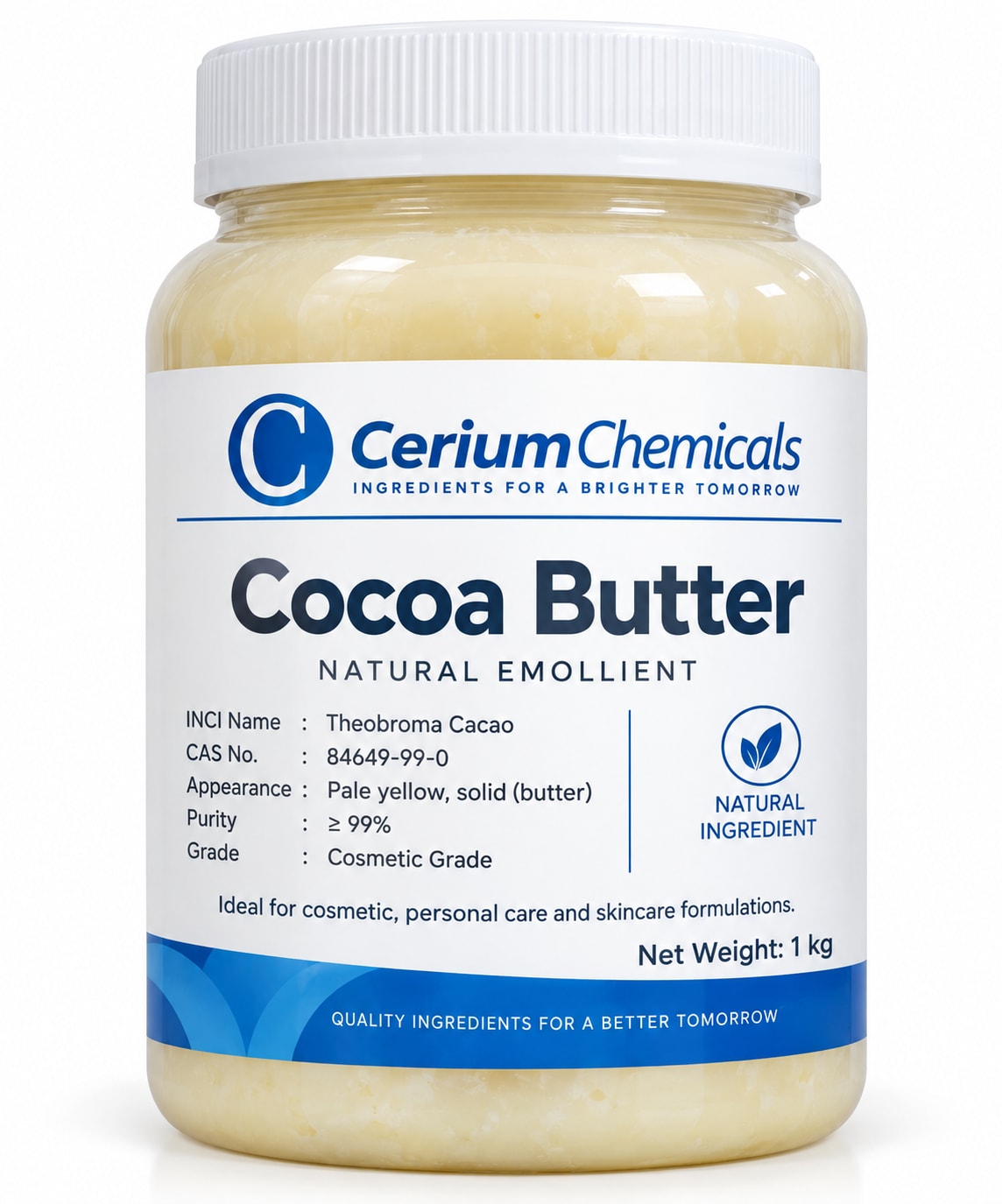
Cocoa Butter
View product
This site uses cookies to measure which pages are useful.
Butters
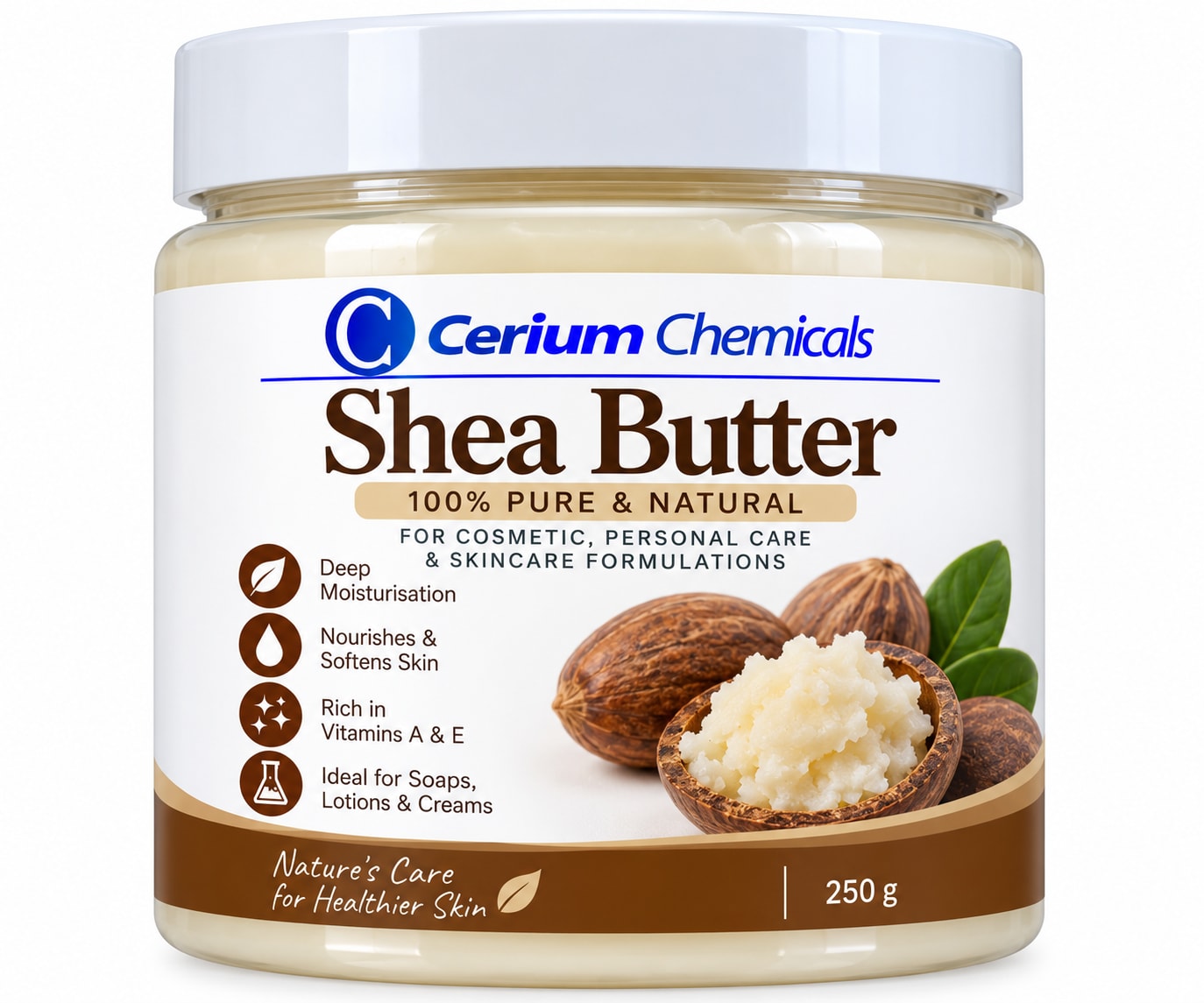
Shea Butter is a natural fat extracted from the nuts of the shea tree, widely used in personal care formulations for its emollient properties.
Speak to the sales team about availability, pack sizes and pricing.
Emollient and moisturiser in skin care products.
Shea butter is extracted from the nuts of the shea tree (Vitellaria paradoxa), primarily found in Africa. The nuts are harvested, dried, and then crushed or ground to release the fat. This fat is then purified to produce the butter, which is solid at ambient temperatures.
The composition of shea butter includes triglycerides rich in fatty acids such as oleic, stearic, and linoleic acids. These components contribute to its emollient and occlusive properties. The butter is traditionally produced by manual methods but is also available through mechanical and solvent extraction processes for industrial use.
As a natural botanical fat, shea butter is valued for its compatibility with skin lipids and its ability to enhance skin hydration and softness. It is a common ingredient in natural and organic personal care formulations.
Formulators choose shea butter to address the need for effective skin moisturisation and conditioning. It helps to restore the skin's natural barrier, reducing dryness and irritation without leaving a greasy residue. Compared to synthetic emollients, shea butter offers a natural alternative that aligns with consumer demand for botanical ingredients.
The trade-offs include its solid form at room temperature, which requires melting or emulsification during processing. Additionally, its natural variability can affect consistency between batches. Despite these considerations, its skin benefits and sensory properties make it a valuable ingredient for a wide range of personal care products.
| Category | 100% Pure Natural Essential Oils, Carrier Oils and Butters |
|---|---|
| Product range | Butters |
| Applications | Skin Care |
| Application | How it is used |
|---|---|
| Moisturising creams and lotions | Shea butter is used to provide deep moisturisation and improve skin softness in creams and lotions. |
| Lip care products | It acts as a nourishing emollient in lip balms, helping to prevent chapping and dryness. |
| Hair conditioners and masks | Shea butter is incorporated to condition and soften hair, improving manageability and shine. |
| Body butters and balms | Used for its rich texture and occlusive properties to protect and hydrate dry skin areas. |
| Baby care formulations | Its gentle, natural properties make it suitable for sensitive baby skin products. |
| After-sun and soothing products | Shea butter helps to calm and nourish skin exposed to sun or environmental stress. |
| Sun care products | It is used as a moisturising base in sunscreens and after-sun lotions to maintain skin hydration. |
Finished products this class of material is suited to. Talk to us about your formulation.
Specifications, handling and supply. Nothing on this page is hidden behind a control.
Shea butter should be handled with standard precautions for natural fats and oils. It is advisable to store it in sealed containers away from direct sunlight and heat to maintain its quality. Good ventilation and protective gloves are recommended during handling to avoid skin irritation or contamination. Stock rotation is important to ensure freshness and maintain formulation consistency.
General guidance. Always work from the safety data sheet supplied with your delivery — it is the document that governs, not this page.
Cerium Chemicals ensures that incoming shea butter is accompanied by supplier documentation and batch records to verify quality. The material is stored under appropriate conditions to preserve its properties until delivery. Regular checks are conducted to maintain consistent supply standards for personal care formulators.
Cerium Chemicals supplies shea butter as part of its range of natural and botanical ingredients to personal care formulators in Nairobi. The company offers sourcing and supply support tailored to the needs of formulators working with plant-based emollients. Technical assistance is available to help integrate shea butter into various skin care formulations.
Cerium supplies formulators across East and Central Africa, dispatched from Industrial Area. Delivery times and freight depend on the pack size and the destination, so they are quoted with your order rather than guessed at here.
Materials Cerium supplies for similar work. They are not alternatives or substitutes — nothing in the supplied data establishes that any two products are interchangeable.
Talk to our sales team about availability, pack sizes, delivery and pricing.
Prefer to write? Send an enquiry about Shea Butter