
Bergamot Oil
View product
This site uses cookies to measure which pages are useful.
Essential Oils
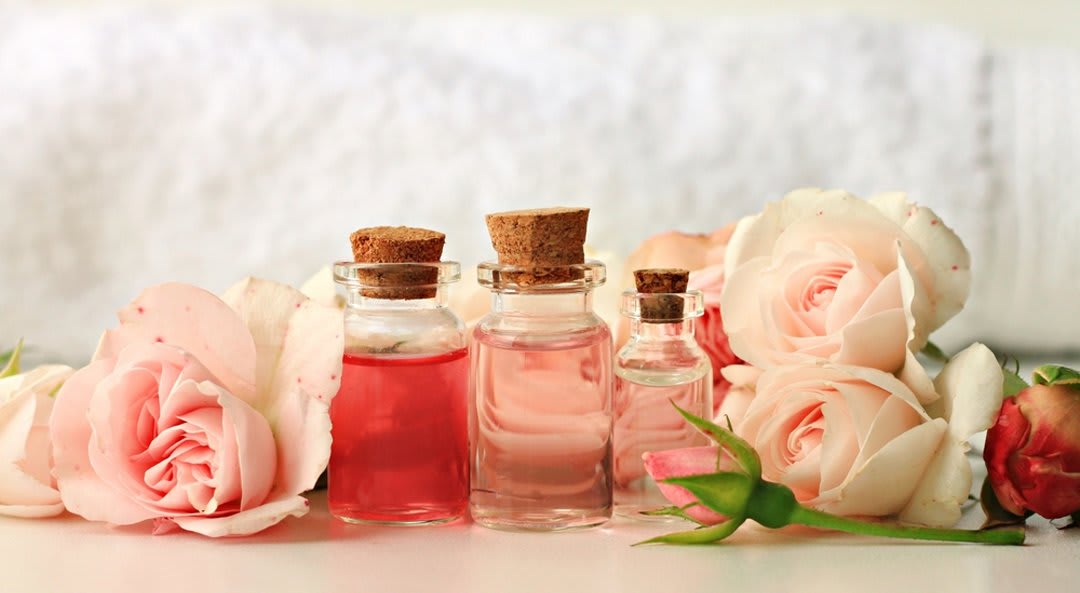
Rose Oil is an essential oil supplied for fine fragrance and prestige personal care formulations. It is among the most valuable materials in perfumery, sold in several distinct forms, and it is used at trace levels where its depth is out of reach of any other single material.
Speak to the sales team about availability, pack sizes and pricing.
Rose Oil is used as a fragrance material in fine fragrance and prestige personal care formulations.
Rose Oil is the aromatic oil obtained from rose petals, supplied as a fragrance raw material. It sits in Cerium's Essential Oils range.
An essential oil is a concentrate. It is not a carrier oil, it is not used at the same levels, and it does not do the same job in a formulation — it is there for scent and for character, and it arrives in quantities where a small error in dosing is a large error in the finished product.
Three distinct materials travel under the name. Rose otto is steam-distilled and gives a bright, fresh, slightly spicy rose. Rose absolute is solvent-extracted and gives a deeper, richer, more jam-like rose closer to the smell of the living flower. And a large part of what is sold as 'rose oil' is a dilution in a carrier, or a compounded fragrance built to smell of rose — legitimate materials with real uses, and not the same thing as the first two.
None of that is a trap so long as you ask. It becomes a problem when a quotation says only 'rose oil' and the price seems surprisingly reasonable.
Rose is the reference point in the floral part of perfumery. A rose accord built without it is possible and is done constantly for cost reasons, but the natural material carries a complexity that compounded alternatives approach rather than reach, and in a prestige product that difference is what is being sold.
For a personal care formulator the calculation is usually about where the money goes furthest. Rose at trace levels in a face oil, a serum or a luxury cream is a positioning decision as much as a sensory one — it appears on the label, it justifies a price, and it is noticed. In a body wash at the same level it would be lost.
It is also worth knowing when not to use it. If the product needs a bright, clean, inexpensive rose in a high-volume format, a compounded fragrance is the right answer and no one is being short-changed.
| Category | 100% Pure Natural Essential Oils, Carrier Oils and Butters |
|---|---|
| Product range | Essential Oils |
| Applications | Air Care |
| Type | Description |
|---|---|
| Rose otto | Steam-distilled from the petals. Bright, fresh and slightly spicy. Solidifies when cool and clears again on warming, which is characteristic of the material. |
| Rose absolute | Solvent-extracted. Deeper, richer and closer to the scent of the living flower, and generally more intensely coloured. |
| Dilutions and compounded rose | Rose material pre-diluted in a carrier, or a fragrance compounded to smell of rose. Widely used and appropriate in many products — just not the same material. Ask what is in it. |
| Application | How it is used |
|---|---|
| Fine fragrance | The material's home. Rose is a cornerstone of floral perfumery and is used as a building block in a compounded accord. |
| Facial oil | A high-value leave-on format where a trace level of a natural rose material is both the scent and part of the positioning. |
| Serum | A small, expensive format where the cost of a trace addition is proportionate and the sensory impact is noticed. |
| Prestige cream or lotion | An emulsion where the fragrance is part of what justifies the price, used at levels set by your safety assessment. |
| Body oil | A larger anhydrous format where rose is typically used as part of a compounded fragrance rather than alone, for cost reasons. |
| Bath product | Bath oils and soaks, where a floral character is traditional and the contact time is short. |
| Soap | A high-value bar where a natural rose note distinguishes the product, bearing in mind how much fragrance a soap base can lose in processing. |
| Home fragrance | Candles, diffusers and room sprays, where a rose accord is usually compounded with the natural material contributing depth. |
Finished products this class of material is suited to. Talk to us about your formulation.
Specifications, handling and supply. Nothing on this page is hidden behind a control.
Cerium publishes no specification for Rose Oil — no constituent figures, no analytical values — and this page states none. For a material at this price, the manufacturer's documentation is not a formality: ask for the technical data sheet, the safety data sheet and the certificate of analysis for the batch you are quoted on, and be clear in writing about which rose material is being supplied.
Adulteration is a real commercial risk in this part of the market, simply because the price difference between the natural material and a convincing substitute is so large. Buying against documentation, from a supplier you can call, is the practical protection available to a formulator who does not run a testing laboratory.
Rose otto solidifies when cool and returns to liquid on gentle warming. That is characteristic of the material rather than a fault, and it is often taken as a sign of the genuine article — though it is not a test.
Use levels in finished products are constrained by fragrance safety standards and by the safety assessment of your own formulation. Rose materials contain constituents that require declaration as fragrance allergens in some markets. Both are decisions for your safety assessor, made against the manufacturer's documentation.
Handle Rose Oil as you would any cosmetic raw material. Work in a ventilated area, wear gloves and eye protection, and avoid prolonged contact with the neat material — a concentrate is not the finished product and does not behave like it.
Keep containers closed when they are not in use and store them cool, dry and out of direct sunlight. Oils make floors slippery; clean spills promptly.
This is a concentrate and should not contact skin neat. Keep it tightly closed — the material is volatile and valuable, and an open container loses both. Store it cool, dark and away from ignition sources, and keep it separate from the bulk store: a small bottle that walks is a large loss.
Cerium publishes no storage or handling figures for Rose Oil. The manufacturer's technical data sheet and safety data sheet are the documents to work from, and the team will send both.
General guidance. Always work from the safety data sheet supplied with your delivery — it is the document that governs, not this page.
Rose Oil arrives with the manufacturer's documentation and is recorded against its batch. Cerium's role here is custody rather than manufacture: material is stored as the supplier specifies and the paperwork that came with a batch stays with it.
Cerium publishes no specification of its own for Rose Oil, and nothing on this page restates one. Where you need a certificate of analysis or a data sheet for a regulatory file, ask for the documents covering the batch you are quoted on — a document that does not match the drum in your store is worth nothing.
Cerium Chemicals supplies Rose Oil from Nairobi, alongside the rest of the Essential Oils range, so a formulator sourcing several materials for one project places one order rather than chasing several.
What comes with it is the conversation before the order. Tell the team what you are formulating and they will say whether Rose Oil is the right material for it, what else in the catalogue does a similar job, and what documentation you will get.
Cerium supplies formulators across East and Central Africa, dispatched from Industrial Area. Delivery times and freight depend on the pack size and the destination, so they are quoted with your order rather than guessed at here.
Materials Cerium supplies for similar work. They are not alternatives or substitutes — nothing in the supplied data establishes that any two products are interchangeable.

Talk to our sales team about availability, pack sizes, delivery and pricing.
Prefer to write? Send an enquiry about Rose Oil