2 min read
This article was drafted by Cerium’s automated writer and published without individual review. It describes general formulation practice, not specifications for our materials — for anything you intend to formulate with, confirm the detail with our team.
Introduction
This article discusses the role of preservatives (opens in a new tab) in personal care formulations, focusing on options available from Cerium Chemicals, specifically Phenoxyethanol & Ethylhexylglycerin and DMDM Hydantoin. It is aimed at formulators and brand owners in East Africa who are considering their choices for ensuring product safety and longevity.
The Importance of Preservatives
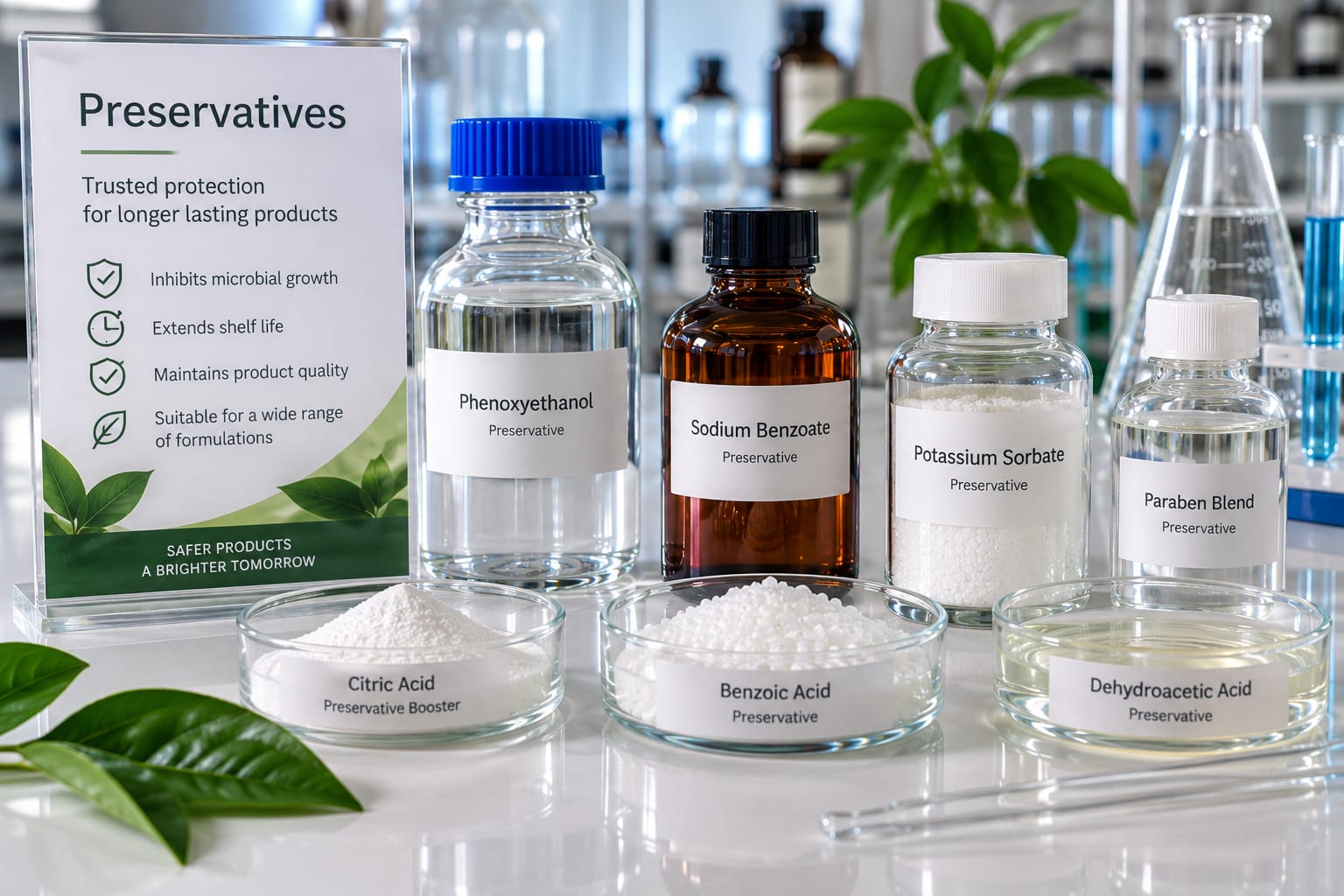
Preservatives (opens in a new tab) play a critical role in cosmetic and personal care products. They help prevent microbial contamination, which can lead to product degradation and pose health risks to consumers. By inhibiting the growth of bacteria, yeast, and mould, preservatives ensure that products remain safe and effective over their intended shelf life.
Types of Preservatives Available
Cerium Chemicals offers two key preservatives:
- Phenoxyethanol & Ethylhexylglycerin: This combination acts as a broad-spectrum preservative, effectively targeting bacteria, yeast, and mould. It is commonly used in water-containing formulations such as emulsions and serums.
- DMDM Hydantoin: This preservative is known for its ability to release formaldehyde, which provides antimicrobial properties. It is often included in formulations to enhance stability and extend shelf life.
Incorporation and Handling
When formulating with preservatives, it is essential to consider the proper incorporation techniques:
- Cool-down Phase: Preservatives are typically added during the cool-down phase of formulation, when temperatures are below 40°C. This practice helps maintain the efficacy of the preservative.
- pH Considerations: The effectiveness of preservatives can be influenced by the pH of the formulation. For example, while Phenoxyethanol is effective across a range of pH levels, others may have specific pH requirements for optimal performance.
Regulatory and Market Considerations
In East Africa, formulators must comply with local regulations (opens in a new tab) set by authorities such as the Kenya Bureau of Standards (KEBS) and the Pharmacy and Poisons Board (PPB). Understanding these regulations is crucial for ensuring that products meet safety standards and can be marketed successfully.
Additionally, there is a growing consumer preference for products that are free from certain preservatives, such as parabens and formaldehyde donors. This trend is impacting formulation choices and may lead to increased demand for more natural and mild preservative options.
Conclusion
Choosing the right preservatives is vital for ensuring the safety and efficacy of personal care products. Cerium Chemicals provides a selection of preservatives that can help formulators meet these needs. For sourcing your preservative requirements, consider reaching out to Cerium Chemicals for further assistance.